HORNET
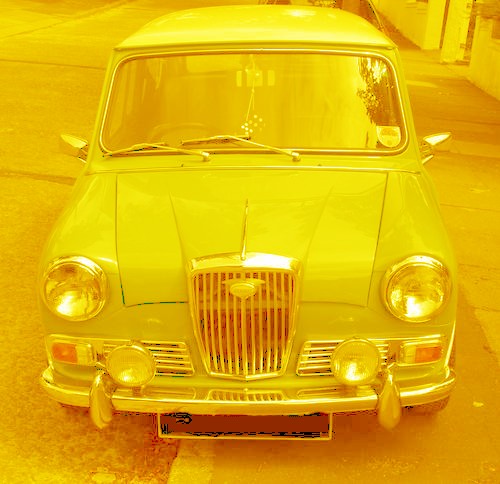
The Wolseley
Hornet 1960s model
An upmarket
version of the Mini

A 1930s Wolseley
Hornet sports car
The bodywork for these was made to order by
a coachbuilder
of the customer’s choice and there were many
variations of this car.
The series ran from 1930 to 1935
The Wolseley Hornet both in its 1930s sports car
incarnation, and its
1960s posh mini version, has
very little (in
fact nothing) to do with Theosophy
but we have
found that Theosophists and new
enquirers do like
pictures of classic cars
and we get a
lot of positive feedback.

You can find
Theosophy Wales groups in
Bangor, Cardiff, Conwy & Swansea

Theosophy Wales
has no controlling body
and is made up of
independent groups

________________________
The Ancient Wisdom
by
Annie Besant
The word Devachan
is the theosophical name for heaven, and, literally translated, means the
shining land, or the Land of the Gods. ( Devasthan,
the place of the Gods, is the Sanskrit equivalent. It is the Svarga of the Hindus ; the Sukhâvati of the Buddhists ; the Heaven of the Zoroastrians
and Christians,
and of the less materialised
among the Mohammedans). It is a specially guarded part of the mental plane,
whence all sorrow and all evil are excluded by the action of the great
spiritual Intelligences who superintend human evolution ; and it is inhabited
by human beings who have cast off their physical and astral bodies, and who
pass into it when their stay in Kâmaloka is
completed.
The devachanic life consists of two stages, of
which the first is passed in the four lower subdivisions of the mental plane, in
which the Thinker still wears the mental body and is conditioned by it, being
employed in assimilating the materials gathered by it during the earth-life
from which he has just emerged.
The second stage is spent in the "formless world," the Thinker
escaping from the mental body, and living in his own
unencumbered life in the full measure of the
self-consciousness and knowledge to which he has attained.
The total length of time spent in Devachan depends upon the
amount of material for the Devachanic life which the soul has brought
with it from its life on earth. The harvest of the fruit for consumption and
assimilation in Devachan
consists of all the pure thoughts and emotions generated during earth-life, all
the intellectual and moral efforts and aspirations, all the memories of
useful work and plans for human service – everything which is capable of being
worked into mental and moral faculty, thus assisting in the evolution of the
soul.
Not one is lost, however feeble, however fleeting ;
but selfish animal passions cannot enter, there being no material in which they
can be expressed. Nor does all the evil in the past life, though it may largely
preponderate over the good, prevent the full reaping of whatever scant harvest
of good there may have been ; the scantiness of the harvest may render the devachanic life very brief, but the most depraved, if he has had
any faint longings after the right, any stirrings of tenderness, must have a
period of devachanic life in which the seed of good may put forth its tender
shoots, in which the spark of good may be gently fanned into a tiny flame.
In the past, when men lived with their hearts largely fixed on heaven
and directed their lives with a view to enjoying its bliss, the period spent in
Devachan
was very long, lasting sometimes for many thousands of years ; at the present
time, men’s minds being so much more centred on
earth, and so few of their thoughts comparatively being directed towards the
higher life, their devachanic periods are correspondingly shortened.
Similarly, the time spent in the higher and lower regions of the mental
plane ( Called technically the Arûpa and Rûpa Devachan – existing on the
arûpa and rûpa levels of
the mental plane ) respectively is proportionate to the amount of thought
generated severally in the mental and causal bodies ; All the thoughts
belonging to the personal self, to the life just closed – with all its
ambitions, interests, loves, hopes, and fears – all these have their fruition
in the Devachan
where forms are found ; while those belonging to the higher mind, to the
regions of abstract, impersonal thinking, have to be worked out in the
"formless" devachanic region. The majority of people only just enter that
lofty region to pass swiftly out again ; some spend
there a large portion of their devachanic existence ; a few spend there almost the whole.
Ere entering into any details let us try to grasp some of the leading
ideas which govern the devachanic life, for it is so different from physical life that any
description of it is apt to mislead by its very strangeness. People realise so little of their mental life, even as led in the
body, that when they are presented with a picture of mental life out of the
body they lose all sense of reality, and feel as though they had passed into a
world of dream.
The first thing to grasp is that mental life is far more intense, vivid,
and nearer to reality than the life of the senses. Everything we see and touch
and hear and taste and handle down here is two removes farther from the reality
than everything we contact in Devachan. We do not even
see things as they are, but the things that we see down here have two more veils
of illusion enveloping them. Our sense of reality here is an entire delusion ;
we know nothing of things, of people, as they are ; all that we know of them
are the impressions they make on our senses, and the conclusions, often
erroneous, which our reason deduces from the aggregate of these impressions.
Get and put side by side the ideas of a man held by his father, his closest
friend, the girl who adores him, his rival in business, his deadliest enemy,
and a casual acquaintance, and see how incongruous the pictures.
Each can only give the impressions made on his own mind, and how far are they from the reality of what the man is, seen by the
eyes that pierces all veils and behold the whole man. We know of each of our
friends the impressions they make on us, and these are strictly limited by our
capacity to receive ; a child may
have as his father a great statesman of lofty
purpose and imperial aims, but that guide of nation’s destinies is to him only
his merriest play fellow, his most enticing storyteller.
We live in the midst of illusions, but we have the feeling of reality,
and this yields us content. In Devachan we shall also be
surrounded by illusions – though, as said, two removes nearer to reality – and
there also we shall have a similar feeling of reality which will yield us
content.
The illusions of earth, though lessened, are not escaped from in the
lower heavens, though contact is more real and more immediate. For it must never
be forgotten that these heavens are part of a great evolutionary scheme, and,
until man has found the real Self, his own unreality makes him subject to
illusions.
One thing however, which produces the feeling of reality in earth-life
and of unreality when we study Devachan, is that we look
at earth-life from within, under the full sway of its illusions, while we
contemplate Devachan
from outside, free for the time from its veil of Mâyâ.
In Devachan
the process is reversed, and its inhabitants feel their own life to be the real
one and look on the earth-life as full of the most patent illusions and
misconceptions. On the whole, they are nearer to the truth than the physical
critics of their heaven-world.
Next, the Thinker – being clad only in the mental body and being in the untrammelled exercise of its powers – manifests the
creative nature of these powers in a way and to an extent that down here we can
hardly realise. On earth a painter, a sculptor, a
musician, dreams, dreams of exquisite beauty, creating their visions by the
powers of the mind ; but when they seek to embody them in the coarse materials
of earth they fall far short of the mental creation. The marble is too
resistant for perfect form, the pigments to muddy for perfect colour.
In heaven, all they think, is at once
reproduced in form, for the rare and subtle matter of the heaven-world is mind
stuff, the medium in which the mind normally works when free from passion, and
it takes shape with every mental impulse. Each man, therefore, in a very real
sense, makes his own heaven, and the beauty of his surroundings is definitely
increased, according to the wealth and energy of his mind. As the soul develops
his powers, his heaven grows more and more subtle and exquisite; all the
limitations in heaven are self-created, and heaven expands and deepens with the
expansion and deepening of the soul.
While the soul is weak and selfish, narrow and ill-developed, his heaven
shares these pettinesses; but it is always the best
that is in the soul, however poor that best may be. As the man evolves, his devachanic lives become fuller, richer, more and more real, and
advanced souls come into ever closer and closer contact with each other,
enjoying wider and deeper intercourse.
A life on earth, thin, feeble, vapid, and narrow, mentally and morally,
produces a comparatively thin, feeble, vapid and narrow life in Devachan, where only the
mental and the moral survive. We cannot have more than we are, and our harvest
is according to our sowing. "Be not deceived; God is not mocked ; for whatsoever a man soweth,
that,"- and neither more nor less, - "shall he also reap." Our
indolence and greediness would fain reap where we have not sown, but in this universe
of law, the Good Law, mercifully just, brings to each the exact wages of his
work.
The mental impressions, or mental pictures, we make of our friends will
dominate us in Devachan.
Round each soul throng those he loved in life, and
every image of the loved ones that live in the heart becomes a living companion
of the soul in heaven. And they are unchanged. They will be to us there as they
were here, and no otherwise. The outer semblance of our friend as it affected
our senses, we form out of mind-stuff in Devachan by the creative
powers of the mind; what was here a mental picture is there – as in truth it
was here, although we knew it not – an objective shape in living mind-stuff,
abiding in our own mental atmosphere ; only what is
dull and dreamy here is forcibly living and vivid there.
And with regard to the true communion, that of the
soul with soul? That is closer, nearer, dearer than anything we know
here, for, as we have seen, there is no barrier on the mental plane between
soul and soul; exactly in proportion to the reality of the soul-life in us is
the reality of soul-communion there ; the mental image of our friend is our own
creation ; his form is as we knew and loved it ; and his soul breathes through
that form to ours just to the extent that his soul and ours can throb in
sympathetic vibration.
But we can have no touch with those we knew on earth if the ties were
only of the physical or astral body, or if they and we were discordant in the
inner life ; therefore into our Devachan no enemy can
enter, for sympathetic accord of minds and hearts can alone draw men together
there.
Separateness of heart and mind means separation in the heavenly life,
for all that is lower than the heart and mind can find no means of expression
there. With those who are far beyond us in evolution we come into contact just
as far as we can respond to them ; great ranges of
their being will stretch beyond our ken, but all that we can touch is ours.
Further, these greater ones can and do aid us in the heavenly life, under
conditions we shall study presently, helping us to
grow towards them, and thus be able to receive more and more. There is then no
separation by space or time, but there is separation by absence of sympathy, by
lack of accord between hearts and minds.
In heaven we are with all whom we love and with all whom we admire, and
we commune with them to the limit of our capacity, or, if we are more advanced,
of theirs. We meet them in the forms we loved on earth, with perfect memory of
our earthly relationships, for heaven is the flowering of all earth’s buds, and
the marred and feeble loves of earth expand into beauty and power there. The
communion being direct, no misunderstandings of words or thoughts can arise ; each sees the thought his friend creates, or as much
of it as he can respond to.
Devachan,
the heaven-world, is a world of bliss, of joy unspeakable. But it is much more
than this, much more than a rest for the weary. In Devachan all that was
valuable in the mental and moral experiences of the Thinker during the life
just ended is worked out, meditated over, and is gradually transmuted into
definite mental and moral faculty, into powers which he will take with him to
his next rebirth. He does not work into the mental body the actual memory of
the past, for the mental body will, in due course, disintegrate ; the memory of
the past abides only in the Thinker himself, who has lived through it and who
endures. But these facts of past experiences are worked into mental capacity,
so that if a man has studied a subject deeply the effects of that study will be
the creation of a special faculty to acquire and master that subject when it is
first presented to him in another incarnation.
He will be born with a special aptitude for that line of study, and will
pick it up with great facility. Everything thought upon earth is thus utilised in Devachan ; every
aspiration is worked up into power ; all frustrated efforts become faculties
and abilities ; struggles and defeats reappear as materials to be wrought into
instruments of victory ; sorrows and errors shine luminous as precious metals
to be worked up into wise and well-directed volitions.
Schemes of beneficence, for which power and skill to accomplish were
lacking in the past, are in Devachan worked out in thought,
acted out, as it were, stage by stage, and the necessary power and skill are
developed as faculties of the mind to be put into use in a future life on
earth, when the clever and earnest student shall be reborn as a genius, when
the devotee shall be reborn as a saint. Life then, in Devachan, is no mere
dream, no lotus-land of purposeless idling ; it is the
land in which the mind and heart develop, unhindered by gross matter and by the
trivial cares, where weapons are forged for earth’s fierce battlefields, and
where the progress of the future is secured.
When the Thinker has consumed in the mental body all the fruits
belonging to it of his earthly life, he shakes it off and dwells unencumbered
in his own place.
All the mental faculties which express themselves on the lower levels
are drawn within the causal body – with the germs of the passional
life that were drawn into the mental body when it left the astral shell to
disintegrate in Kâmaloka – and these become latent
for a time, lying within the causal body, forces which remain concealed for
lack of material in which to manifest. (The thoughtful student may here find a
fruitful suggestion on the problem of continuing consciousness after the cycle
of the universe is trodden. Let him place Îshvara in
the place of the Thinker, and let the faculties that are the fruits of a life
represent the human lives that are the fruits of a Universe. He may then catch
some glimpse of what is necessary for consciousness, during the interval
between universes).
The mental body, the last of the temporary vestures of the true man,
disintegrates, and its materials return to the general matter of the mental
plane, whence they were drawn when the Thinker last descended into incarnation.
Thus the causal body alone remains, the
receptacle and treasure-house of all that has been assimilated from the life
that is over. The Thinker has finished a round of his long pilgrimage and
dwells for a while in his own native land.
His condition as to consciousness depends entirely on the point he has
reached in evolution. In his early stages of life he will merely sleep, wrapped
in unconsciousness, when he has lost his vehicles on the lower planes. His life
will pulse gently within him, assimilating any little results from his closed
earth-existence that may be capable of entering into his substance
; but he will have no consciousness of his surroundings. But as he
develops, this period of his life becomes more and more important, and occupies
a greater proportion of his devachanic existence.
He becomes self-conscious, and thereby conscious of his surroundings –
of the not-self – and his memory spreads before him the panorama of his life,
stretching backwards into the ages of the past. He sees the causes that worked
out their effects in the last of his life-experiences, and studies the causes
he has set going in this latest incarnation. He assimilates and works into the
texture of the causal body all that was noblest and loftiest in the closed
chapter of his life, and by his inner activity he develops and co-ordinates the
materials in his causal body. He comes into direct contact with great souls,
whether in or out of the body at the time, enjoys communion with them, learns
from their riper wisdom and longer experience.
Each succeeding devachanic life is richer and deeper ;
with his expanding capacity to receive, knowledge flows into him in fuller
tides ; more and more he learns to understand the workings of the law, the
conditions of evolutionary progress, and thus returns to earth-life each time
with greater knowledge, more effective power, his vision of the goal of life
becoming ever clearer and the way to it more plain before his feet.
To every Thinker, however unprogressed, there
comes a moment of clear vision when the time arrives for his return to the life
of the lower worlds. For a moment he sees his past and the causes working from
it into the future, and the general map of his next incarnation is also
unrolled before him.
Then the clouds of lower matter surge round him and obscure his vision,
and the cycle of another incarnation begins with the awakening of the powers of
the lower mind, and their drawing round him, by their vibrations, materials
from the lower mental plane to form the new mental body for the opening chapter
of his life-history. This part of our subject, however, belongs in its detail
to the chapters on reincarnation.
We left the soul asleep, (See Chapter III., On Kâmaloka,
) having shaken off the last remains of his astral body, ready to pass out of Kâmaloka into Devachan, out of purgatory
into heaven. The sleeper awakens to a sense of joy unspeakable, of bliss
immeasurable, of peace that passeth understanding.
Softest melodies are breathing round him, tenderest
hues greet his opening eyes, the very air seems music and colour,
the whole being is suffused with light and harmony.
Then through the golden haze dawn sweetly the faces loved on earth, etherialised into the beauty which expresses their noblest,
loveliest emotions, unmarred by the troubles and the passions of the lower
worlds. Who may tell the bliss of that awakening, the glory of that first
dawning of the heaven-world?
We will now study the conditions in detail of the seven subdivisions of Devachan, remembering that
in the four lower we are in the world of form, and a world, moreover, in which
every thought presents itself at once as a form. This world of form belongs to
the personality, and every soul is therefore surrounded by as much of his past
life as has entered into his mind and can be expressed in pure mind-stuff.
The first, or lowest, region is the heaven of the least progressed
souls, whose highest emotion on earth was a narrow, sincere, and sometimes
selfish love for family and friends. Or it may be that they felt some loving
admiration for some one they met on earth who was purer and better than
themselves, or felt some wish to lead a higher life, or some passing aspiration
towards mental and moral expansion.
There is not much material here out of which faculty can be moulded, and their life is but very slightly progressive ;
their family affections will be nourished and a little widened, and they will
be reborn after a while with a somewhat improved emotional nature, with more
tendency to recognise and respond to a higher ideal.
Meanwhile they are enjoying all the happiness they can receive; their cup is
but a small one, but it is filled to the brim with bliss, and they enjoy all
that they are able to conceive of heaven. Its purity, its harmony, play on their undeveloped faculties and woo them to awaken
into activity, and the inner stirrings begin which must precede any manifested
budding.
The next division of devachanic life comprises men and women of
every religious faith whose hearts during their earthly lives had turned with
loving devotion to God, under any name, under any form. The form may have been
narrow, but the heart rose up in aspiration, and here finds the object of its
loving worship.
The concept of the Divine which was formed by their mind when on earth
here meets them in the radiant glory of devachanic matter, fairer, diviner, than
their wildest dreams.
The Divine One limits Himself to meet the intellectual limits of His
worshipper, and in whatever form the worshipper has loved and worshipped Him,
in that form He reveals Himself to his longing eyes, and pours out on him the
sweetness of His answering love. The souls are steeped in religious ecstasy,
worshipping the One under the forms their piety sought on earth, losing
themselves in the raptures of devotion, in communion with the Object they
adore.
No one finds himself a stranger in the heavenly places, the Divine
veiling Himself in the familiar form. Such souls grow in purity and in devotion
under the sun of this communion, and return to earth with these qualities much intensified.
Nor is all their devachanic life spent in this devotional
ecstasy, for they have full opportunities of maturing every other quality they
may possess of heart and mind.
Passing onwards to the third region, we come to those noble and earnest
beings who were devoted servants of humanity while on
earth, and largely poured out their love to God in the form of works for man.
They are reaping the reward of their good deeds by developing larger powers of
usefulness and increased wisdom in their direction. Plans of wider beneficence
unroll themselves before the mind of the philanthropist, and like an architect,
he designs the future edifice which he will build in a coming life on earth ; he
matures the schemes which he will then work out into actions, and like a
creative God plans his universe of
benevolence, which shall be manifested in gross matter
when the time is ripe. These souls will appear as the great philanthropists of
yet unborn centuries, who will incarnate on earth with innate dower of
unselfish love and of power to achieve.
Most varied in character, perhaps, of all the heavens is the fourth, for
here the powers of the most advanced souls find their exercise, so far as they
can be expressed in the world of form. Here the kings of art and of literature
are found, exercising all their powers of form, of colour,
of harmony, and building
greater faculties with which to be reborn when
they return to earth. Noblest music, ravishing beyond description, peals forth
from the mightiest monarchs of harmony that the earth has known, as Beethoven,
no longer deaf, pours out his imperial soul in strains of unexampled beauty,
making even the heaven world more melodious as he draws down harmonies from
higher spheres, and sends them thrilling through the heavenly places. Here also
we find the masters of painting and of sculpture, learning new hues of colour, new curves of undreamed beauty.
And here also are others who failed, though greatly aspiring, and who
are here transmuting longings into powers, and dreams into faculties, that
shall be theirs in another life. Searchers into Nature are here, and they are
learning her hidden secrets ; before their eyes are
unrolling systems of worlds with all
their hidden mechanism, woven series of workings of unimaginable
delicacy and complexity ; they shall return to earth as great
"discoverers," with unerring intuitions of the mysterious ways of
Nature.
In this heaven also are found students of the deeper knowledge, the
eager, reverent pupils who sought the Teachers of the race, who longed to find
a Teacher, and patiently worked at all that had been given out by some one of
the great spiritual Masters who have taught humanity. Here their longings find
their
fruition, and Those they sought, apparently in
vain, are now their instructors ; the eager souls drink in the heavenly wisdom,
and swift their growth and progress as they sit at their Master’s feet. As
teachers and as light-bringers shall they be born again on earth, born with the
birthmark of the teacher’s high office upon them.
Many a student on earth, all unknowing of these subtler workings, is
preparing himself a place in this fourth heaven, as he bends with a real
devotion over the pages of some teacher of genius, over the teachings of some
advanced soul. He is forming a link between himself and the teacher he loves
and reverences, and in the heaven-world that soul-tie will assert itself, and
draw together into communion the souls it links. As the sun pours down its rays
into many rooms, and each room has all it can contain of the solar beams, so in
the heaven-world do these great souls shine into hundreds of mental images of
themselves created by their pupils, fill them with life, with their own
essence, so that each student has his master to teach him and yet shuts out
none other from his aid.
Thus, for periods long in proportion to the materials gathered for
consumption upon earth, dwell men in these heaven-worlds of form, where all
good that the last personal life had garnered finds its full fruition, its full
working out into minutest detail. Then as we have seen, when everything is
exhausted, when
the last drop has been drained from the cup of joy, the last crumb eaten
of the heavenly feast, all that has been worked up into faculty, that is of
permanent value, is drawn within the causal body, and the Thinker shakes off
him and the then disintegrating body through which he has found expression on
the lower levels of the devachanic world. Rid of this mental body, he is in his own world,
to work up whatever of his harvest can find material suitable for it in that
high realm.
A vast number of souls touch the lowest level of the formless world as
it were but for a moment, taking brief refuge there, since all lower vehicles
have fallen away. But so embryonic are they that they have as yet no active
powers that there can function independently, and they become unconscious as
the mental body slips away into disintegration. Then, for a moment, they are
aroused to consciousness, and a flash of memory illumines their past and they
see its pregnant causes ; and a flash of foreknowledge illumines their future,
and they see such effects as will work out in the coming life. This is all that
very many are as yet able to experience of the formless world. For, here again,
as ever, the harvest is according to the sowing, and how should they who have
sowed nothing for that lofty region expect to reap any harvest therein?
But many souls have during their earth-life, by deep thinking and noble
living, sown much seed, the harvest of which belongs to this fifth devachanic region, the lowest of the three heavens of the
formless world. Great is now their reward for having so risen above the bondage
of the flesh and of passion, and they begin to experience the real life of man,
the lofty existence of the soul
itself, unfettered by vestures belonging to the
lower worlds. They learn truths by direct vision, and see the fundamental
causes of which all concrete objects are the results; they study the underlying
unities, whose presence is marked in the lower worlds by the variety of
irrelevant details.
Thus they gain a deep knowledge of law, and learn to recognise
its changeless workings below results apparently the most incongruous, thus
building into the body that endures firm unshakable convictions, that will
reveal themselves in earth-life as deep intuitive certainties of the soul,
above and beyond all reasoning. Here also the man studies his own past, and
carefully disentangles the causes he has set going ; he marks their
interaction, the resultants accruing from them, and sees something of their
working out in the lives yet in the future.
In the sixth heaven are more advanced souls, who during earth-life had
felt but little attraction for its passing shows, and who had devoted all their
energies to the higher intellectual and moral life.
For them there is no veil upon the past, their memory is perfect and unbroken,
and they plan the infusion into
their next life of energies that will neutralise many of the forces that are working for
hindrance, and strengthen many of those that are working for good.
This clear memory enables them to form definite and strong
determinations as to actions which are to be done and actions which are to be
avoided, and these volitions they will be able to impress on their lower
vehicles in their next birth, making certain classes of evils impossible,
contrary to what is felt to
be the deepest nature, and certain kinds of
good inevitable, the irresistible demands of a voice that will not be denied.
These souls are born into the world with high and noble qualities which
render a base life impossible, and stamp the babe from its cradle as one of the
pioneers of humanity. The man who has attained to this sixth heaven sees
unrolled before him the vast treasures of the Divine Mind in creative activity
and can study the archetypes of all forms that are being gradually evolved in
the lower worlds.
There he may bathe himself in the fathomless ocean of the Divine Wisdom,
and unravel the problems connected with the working out of those archetypes,
the partial good that seems as evil to the limited vision of men encased in
flesh.
In this wider outlook, phenomena assume their due relative proportions,
and he sees the justification of the divine ways, no longer to him "past
finding out" so far as they are concerned with the evolution of the lower
worlds.
The questions over which on earth he pondered, and whose answers ever
eluded his eager intellect, are here solved by an insight that pierces through
phenomenal veils and sees the connecting links which make the chain complete.
Here also the
soul is in the immediate presence of, and in
full communion with, the greater souls that have evolved in our humanity, and,
escaped from the bonds which make "the past" of earth, he enjoys
"the ever-present" of an endless and unbroken life.
Those we speak of here as "the mighty dead" are there the
glorious living, and the soul enjoys the high rapture of their presence, and
grows more like them as their strong harmony attunes his vibrant nature to
their key.
Yet higher, lovelier, gleams the seventh heaven, where Masters and
Initiates have their intellectual home. No soul can dwell there ere yet is has
passed while on earth through the narrow gateway of Initiation, the strait gate
that "leadeth unto life" unending. ( See Chapter XI, on "Man’s Ascent." The Initiate
has stepped out of the ordinary line of
evolution, and is treading a shorter and steeper road to human perfection).
That world is the source of the strongest intellectual and moral
impulses that flow down to earth ; thence are poured
forth the invigorating streams of the loftiest energy. The intellectual life of
the world has there its root; thence genius receives its purest inspirations.
To the souls that dwell there it matters little whether, at the time, they be
or be not connected with the lower
vehicles ; they ever enjoy their lofty self-consciousness and their
communion with those around them ; whether, when "embodied" they
suffuse their lower vehicles with as much of this consciousness as they can
contain is a matter for their own choice – they can give or withhold as they
will.
And more and more their volitions are guided by the will of the Great
Ones, whose will is one with the will of the LOGOS, the will which seeks ever
the good of the worlds. For here are being eliminated the last vestiges of
separateness – ( Ahamkâra, the " I " making
principle, necessary in order that self consciousness may be evolved, but
transcended when its work is over) – in all who have not yet reached final
emancipation – all, that is, who are not yet Masters – and, as these perish,
the will becomes more and more harmonised with the
will that guides the worlds.
Such is an outline of the "seven heavens" into one or other of
which men pass in due time after the "change that men call death." For death is only a change that gives the soul a partial
liberation, releasing him from the heaviest of his chains. It is but a
birth into a wider life, a return after a brief exile on earth to the soul’s
true home, a passing from a prison into the freedom of the upper air. Death is
the greatest of earth’s illusions ; there is no death,
but only changes in life’s conditions. Life is
continuous, unbroken, unbreakable ; "unborn,
eternal, constant," it perishes not with the perishing of the bodies
that clothe it. We might as well think that the
sky is falling when a pot is broken, as imagine that the soul perishes when the
body falls to pieces. ( A simile used in the Bhagavad Purâna).
The physical, astral and mental planes are "the three worlds"
though which lies the pilgrimage of the soul, again
and again repeated. In these three worlds revolves the wheel of human life, and
souls are bound to that wheel throughout their evolution, and are carried by it
to each of these worlds in turn. We are
now in a position to trace a complete
life-period of the soul, the aggregate of these periods making up its life, and
we can also distinguish clearly the difference between personality and
individuality.
A soul when its stay in the formless world of Devachan is over, begins a new life-period by putting forth the energies
which function in the form-world of the mental plane, these energies being the
resultant of the preceding life-periods. These passing outwards, gather round themselves,
from the matter of the four lower mental levels, such materials as are suitable
for their
expression, and thus the new mental body for the
coming birth is formed. The vibration of these mental energies arouses the
energies which belong to the desire-nature, and these begin to vibrate ; as they awake and throb, they attract to
themselves suitable materials for their expression from the matter of
the astral world, and these form the new
astral body for the approaching incarnation.
Thus the Thinker becomes clothed with his mental and astral vestures,
exactly expressing the faculties evolved during the past stage of his life. He
is drawn, by forces which will be explained later, (See Chapter VII , on "Reincarnation") to the family which is
to provide him with a suitable physical encasement, and
becomes connected with this encasement through his
astral body.
During prenatal life the mental body becomes involved with the lower
vehicles, and this connection becomes closer and closer through the early years
of childhood, until at the seventh year they are as completely in touch with
the Thinker himself as the stage of evolution permits. He then begins to
slightly control his vehicles, if sufficiently advanced, and what we call
conscience is
his monitory voice. In any case, he gathers
experience through these vehicles, and during the continuance of earth-life,
stores the gathered experience in its own proper vehicle, in the body connected
with the plane to which the experience belongs.
When the earth-life is over the physical body drops away, and with it
his power of contacting the physical world, and his
energies are therefore confined to the astral and mental planes. In due course,
the astral body decays, and the outgoings of his life are confined to the
mental plane, the astral faculties
being gathered up and laid by within himself as
latent energies.
Once again, in due course, its assimilative work completed, the mental
body disintegrates, its energies in turn becoming latent in the Thinker, and he
withdraws his life entirely into the formless devachanic world, his own native habitat.
Thence, all experiences of his life period in the three worlds being
transmuted into faculties and powers for future use,
are contained within himself, he anew commences his pilgrimage and treads the
cycle of another life-period with increased power and knowledge.
The personality consists of the transitory vehicles through which the
Thinker energises in the physical, astral, and lower
mental worlds, and of all the activities connected with these. These are bound
together by the links of memory caused by impressions made on the three lower bodies ; and, by the self-identification of the Thinker with
his three vehicles, the personal " I " is set up. In the lower stages
of evolution this " I " is in the physical
and
passional vehicles, in
which the greatest activity is shown, later it is in the mental vehicle, which
then assumes predominance.
The personality with its transient feeling, desires, passions, thus
forms a quasi-independent entity, though drawing all its energies from the
Thinker it enwraps, and as its qualifications, belonging to the lower worlds,
are often in direct antagonism to the permanent interests of the "Dweller
in the body," conflict is set up in which victory inclines sometimes to
the temporary pleasure, sometimes to the permanent gain. The life of the
personality begins when the Thinker forms his new mental body, and it endures
until that mental body disintegrates at the close of its life in the form-world
of Devachan.
The individuality consists of the Thinker himself, the immortal tree
that puts out all these personalities as leaves, to last through the spring,
summer and autumn of human life. All that the leaves take in and assimilate
enriches the sap that courses through their veins, and in the autumn this is
withdrawn into the parent trunk, and the dry leaf falls and perishes. The
Thinker alone lives
forever ; he is the man for whom "the hour
never strikes," the eternal youth who as the Bhagavad
Gitâ has it, puts on and casts off bodies as a man
puts on new garments and throws off the old.
Each personality is a new part for the immortal Actor, and he treads the
stage of life over and over again, only in the life-drama each character he
assumes is the child of the preceding ones and the father of those to come, so
that the life-drama is a continuous history, the history of the Actor who plays
the
successive parts.
To the three worlds that we have studied is confined the life of the
Thinker, while he is treading the earlier stages of human evolution. A time
will come in the evolution of humanity when its feet will enter loftier realms,
and reincarnation will be of the past. But while the wheel of rebirth and death
is turning, a man is bound thereon by desires that pertain to the three worlds,
his
life is led in these three regions.
To the realms that lie beyond we now may turn, albeit but little can be
said of them that can be either useful or intelligible. Such little as may be
said, however, is necessary for the outlining of the Ancient Wisdom.
_____________________________________
Annie Besant Visits Cardiff 1924

A “G” reg Aug 1968 – July
1969 Wolseley
Hornet MK III
The 1960s Wolseley
Hornet was produced by the British Motor Corporation
(BMC) from 1961 to 1969 and was upgraded
thro’ MKI, II & III models
although the outward design remained the same.
The Wolseley
Hornet was similar to the more expensive Riley Elf which ran
for the same period with only the Riley grill
and badge to distinguish
it to the casual observer.
_____________________________
More Theosophy Stuff
with these
links

Cardiff Theosophical Society meetings are informal
and
there’s always a cup of tea afterwards
The Cardiff Theosophical Society Website
The National Wales Theosophy Website
Bangor,
Cardiff, Conwy & Swansea
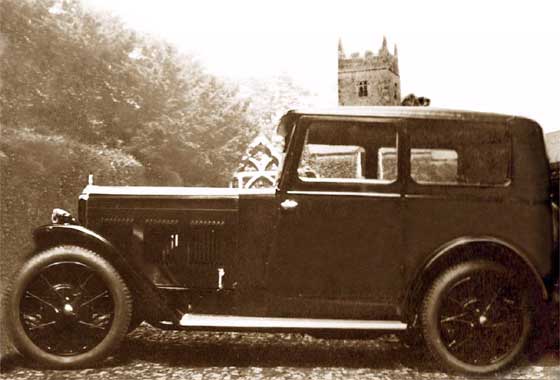
A 1931 Wolseley
Hornet saloon style convertible
The Wolseley Hornet was a lightweight saloon car
produced by the Wolseley Motor Company from 1930 to
1935.
It had a six cylinder (1271cc) engine with a single overhead cam, and
hydraulic brakes. The engine was modified in 1932 to make it shorter and it was
moved forwards on the chassis. In 1935 the engine size was increased to
1378 cc.
Wolseley supplied the firsts cars as either an enclosed
saloon with steel or fabric body or open two seater.
From 1931 it was available without the saloon body, and was used as the basis
for a number of sporting specials for which the customer could choose a styling
from a range of coachbuilders. In 1932 Wolsley added
two and four seat coupés to the range. For its final year of production the
range was rationalised to a standard saloon and
coupé.
A three speed gearbox was fitted to the earliest cars but this was upgraded
to a four speed in 1932 and fitted with synchromesh from 1933. A freewheel
mechanism could be ordered in 1934.The engine was also used in a range of MG
cars.
If
you run a Theosophy Group, please feel free
to use any of the
material on this site
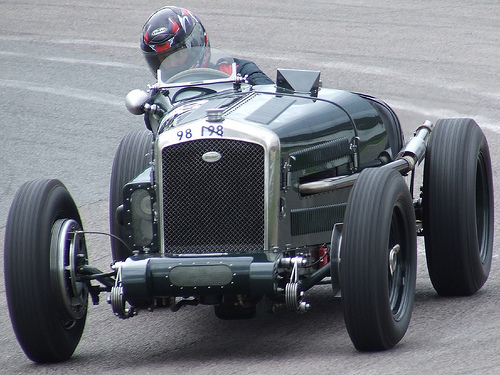
1930s Wolseley
Hornet racing car circuiting the track in modern times
The Most Basic Theosophy
Website in the Universe
A quick overview of Theosophy
and the Theosophical Society
If you run a Theosophy Group you
can use this as an introductory handout.
Theosophy Cardiff’s Instant Guide
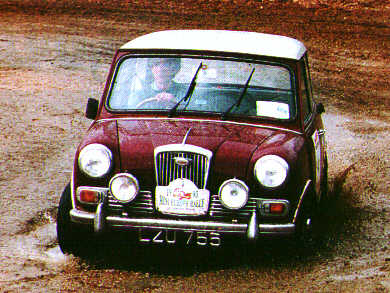
Wolseley Hornet on a rally circa 1963
Theosophical Movement in Wales
as
it separates into independent
groups that run do their own show

Early 1930s Wolseley
Hornet customized roadster design
Basic front
mudguards not extending to runner boards.
Only the driver gets a windscreen wiper

Patriotic Wolseley
Hornet on the race track in 1965
One liners and quick explanations
H P Blavatsky is usually the only
Theosophist that most people have ever
heard of. Let’s
put that right
The Voice of the Silence Website
An Independent Theosophical Republic
Links to Free Online Theosophy
Study Resources; Courses, Writings,

Early 1930s Customized Wolseley Hornet with
integrated front mudguards
and runner boards. Two
windscreen wipers on this one.
The main criteria for the inclusion of
links on this site is that they have some
relationship (however tenuous) to Theosophy
and are lightweight, amusing or entertaining.
Topics include Quantum Theory and Socks,
Dick Dastardly and Legendary Blues Singers.

Four views of the car in the picture above
A selection of articles on Reincarnation
Provided in response to the large
number of enquiries we receive at
Cardiff Theosophical Society on this subject
The Voice of the Silence Website
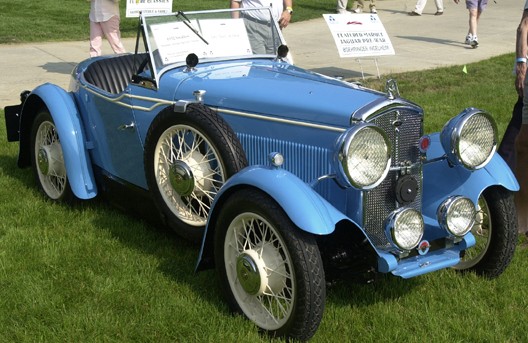
Swallow Wolseley Hornet 1932

A leaflet promoting the new hydrolastic suspension introduced in the mid sixties.
This became standard on many BMC models
including the Mini, 1100, 1300
& 1800 models. Suspension was maintained by means of a
sealed fluid system
which was claimed to be very comfortable but
appeared to make some people
seasick in the larger cars. As the cars got older,
the suspension might burst
causing the car’s suspension to collapse on one
side meaning a difficult
drive home or to a garage.
This is for everyone, you don’t have to live
in
Wales to make good use of this Website

1930s
No
Aardvarks were harmed in the

A 1966 Wolseley Hornet convertible by Crayford Engineering
Convertible 1960s Hornets were not standard and were very rare as
were all convertibles in the Mini range.
Crayford did a run of 57 Hornet convertibles for
Heinz to be given
as prizes in a competition
Within the British Isles, The Adyar Theosophical Society has Groups in;
Bangor*Basingstoke*Billericay*Birmingham*Blackburn*Bolton*Bournemouth
Bradford*Bristol*Camberley*Cardiff*Chester*Conwy*Coventry*Dundee*Edinburgh
Folkstone*Glasgow*Grimsby*Inverness*Isle of Man*Lancaster*Leeds*Leicester
Letchworth*London*Manchester*Merseyside*Middlesborough*Newcastle
upon Tyne
North Devon*Northampton*Northern
Ireland*Norwich*Nottingham
Perth*Republic of Ireland*Sidmouth*Southport*Sussex*Swansea*Torbay
Tunbridge Wells*Wallasey*Warrington*Wembley*Winchester*Worthing
The Spiritual Home of Urban Theosophy
The Earth Base for Evolutionary Theosophy
A B C D EFG H IJ KL M N OP QR S T UV WXYZ
Complete Theosophical Glossary in Plain Text Format
1.22MB
__________________
& of course
you don’t need to live in Wales
to take advantage of this guide
_____________________
Camberley, Surrey, England
GU15 - 2LF
Tekels Park to be Sold to a Developer
Concerns are raised
about the fate of the wildlife as
The Spiritual
Retreat, Tekels Park in Camberley,
Surrey, England is to be sold to a developer
Tekels Park is a 50 acre
woodland park, purchased
for the Adyar
Theosophical Society in England in 1929.
In addition to
concern about the park, many are
worried about the
future of the Tekels Park Deer
as they are not a protected species.
Many feel that the
sale of a sanctuary
for wildlife to a developer can only
mean
disaster for the park’s animals
In addition to
concern about the park,
many are worried about the
future
of the Tekels Park Deer as they
Confusion as the Theoversity moves out of
Tekels Park to
Southampton, Glastonbury &
Chorley in Lancashire while the
leadership claim
that the Theosophical
Society will carry on using
Tekels Park despite its sale to a developer
Anyone planning a
“Spiritual” stay at the
Tekels Park Guest House
should be aware of the sale.
Theosophy talks of
a compassionate attitude
to animals and the
sale of the Tekels Park
sanctuary for wildlife to a
developer has
Future of Tekels Park Badgers in
Doubt
Party On! Tekels Park Theosophy
NOT
St Francis Church at Tekels Park
Tekels Park & the Loch Ness Monster
A Satirical view of
the sale of Tekels Park
in Camberley, Surrey to a developer
The Toff’s Guide to the Sale of Tekels Park
What the men in top
hats have to
say about the sale of Tekels Park
____________________
The
Theosophy Cardiff Guide to
Pendle Hill, Lancashire, England.
Quick Explanations with Links to More Detailed Info
What is Theosophy ? Theosophy Defined (More Detail)
Three Fundamental Propositions Key Concepts of Theosophy
Cosmogenesis Anthropogenesis
Root Races
Karma
Ascended Masters After Death States
Reincarnation
The Seven Principles of Man Helena Petrovna Blavatsky
Colonel Henry Steel Olcott William Quan Judge
The Start of the Theosophical Society
History of the Theosophical Society
Theosophical Society Presidents
History of the Theosophical Society in Wales
The Three Objectives of the Theosophical Society
Explanation of the Theosophical Society Emblem
Glossaries of Theosophical Terms

Another good example of a 1930s Wolseley Hornet
An Outstanding Introduction to Theosophy
By a student of Katherine Tingley
Elementary Theosophy Who is the Man? Body and Soul
Body, Soul and Spirit Reincarnation Karma

1960s Riley Elf
Outwardly the same as the Wolseley Hornet except for the badge & grill
A bit more expensive
What Theosophy Is From the Absolute to Man
The Formation of a Solar System The Evolution of Life
The Constitution of Man After Death Reincarnation
The Purpose of Life The Planetary Chains
The Result of Theosophical Study

1930’s Wolseley
Hornet on a hill climb trial
An Outline of Theosophy
Charles Webster Leadbeater
Theosophy - What it is How is it Known? The Method of Observation
General Principles The Three Great Truths The Deity
Advantage Gained from this
Knowledge The Divine Scheme
The Constitution of Man The True Man Reincarnation
The Wider Outlook Death Man’s Past and Future
Cause and Effect What Theosophy does for us

Side and rear view of a 1960s Wolseley Hornet
Try these if you are looking for a local
Theosophy Group or Centre
UK Listing of Theosophical Groups
Please tell us about your UK Theosophy Group

1960s Wolseley
Hornet promotional leaflet
___________________
into categories
and presented according to relevance of website.
Web
Directory - Add Link - Submit Article - Online Store - Forum
______________________
General pages about Wales, Welsh History
and The History of Theosophy in Wales
Wales is a
Principality within the United Kingdom and has an eastern
border with England. The
land area is just over 8,000 square miles.
Snowdon in North Wales is
the highest mountain at 3,650 feet.
The coastline is
almost 750 miles long. The population of Wales
as at the 2001 census is 2,946,200.
________________
Bangor, Conwy & Swansea Lodges are members
of the Welsh
Regional Association (Formed 1993).
Theosophy Cardiff
separated from the Welsh Regional
Association in
March 2008 and became an independent
body within the Theosophical Movement in March 2010
High Drama & Worldwide Confusion
as
Theosophy Cardiff Separates from the
Welsh Regional Association (formed 1993)
Theosophy Cardiff cancels its Affiliation
to the Adyar Based Theosophical Society
Cardiff, Wales, UK, CF24 – 1DL
#theosophy_headquarters
#theosophical events #theosophy_cardiff
#theosophy_wales #theosophy_current_programme
#blavatsky
#olcott #judge #secret_doctrine
#isis_unveiled